Week 3 Blog, Interaction Types

Overview

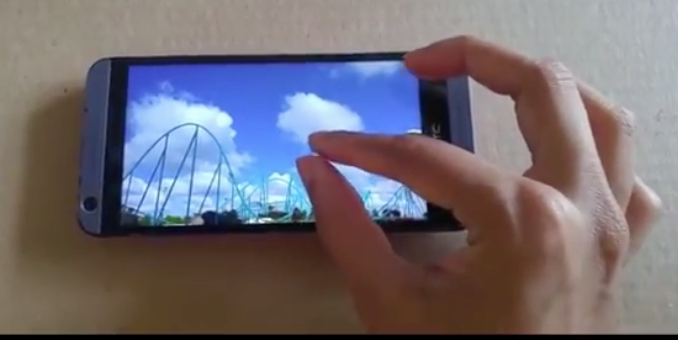
Interaction types cover the broad range of ways that a person would interact with a product, whether that be a program built into a computer or a physical object. Of which there are four ways to do so as described in the text; instructing, conversing, manipulating, and exploring. Each of them covering different ways we can learn. Manipulating for example, would be how we would physically interact with the object in the real world. Conversing on the other hand, would be simply be inputting and responding through speech or text-based communication.
Reflection

Manipulation was the interaction type that I found most interesting. Given that’s how most people interact with objects on a day to day basis by physically getting our hands on them instead of being told about them or talking to them. With some exceptions of course.

My Thoughts

Manipulation was the interaction type that I found most interesting. Given that’s how most people interact with objects on a day to day basis by physically getting our hands on them instead of being told about them or talking to them. With some exceptions of course.

References


Sherugar, S., & Budiu, R. (2016, August 21). Direct Manipulation: Definition. Retrieved from https://www.nngroup.com/articles/direct-manipulation/

Sharp, H., Preece, J., & Rogers, Y. (2015). Interaction Design: Beyond Human – Computer Interaction (4rth ed.). Wiley.

Week 2 Blog, Internet of Things

The Internet of Things (IoT) is a collection of items; such as phones, personal computers, and other smart devices ranging from fridges and thermostats, all being connected together through the internet. Allowing them to send and receive data from one another.

Reflection

Every device in anyone’s house hold has the potential to be connected to one another in some way or another. This can provide ease of access from anywhere. A smart fridge for example can be used to keep a list of ingredients that you need, and that list can be sync up to your phone while you’re out at the store. Another example could be thermometers which once again can be controlled through your phone in order to change the temperature of the house from anywhere. However, this does carry some risk to it. Unprotected devices can be used by hackers to easily infiltrate your network and gain access to everything else that might be on it. Such as the case of an undisclosed casino whose database was hacked into all because of the thermometer inside of their fish tanks. It was an unsecured point that the hacker managed to get into and then move deeper into the casino’s network. During in-class discussions on the topic, one of my peers said something that summarized it wonderfully. “If it has a signal. It can lead to terrible things.”

My Thoughts

I think that the IoT is incredibly convenient to the everyday life of people. But that it carries certain risks with the lack of security that most of these smart devices suffer from. As mentioned before, something as simple as an unsecured thermometer was enough to get access to a casino’s entire database. This paired with the fact that whenever we go on the internet we’re being tracked and followed by all sorts of companies in the business of collection information, this could just be another way they get it.

References

Burgess, M (2018, February 16) What is the Internet of Things? WIRED explains. Retrieved from https://www.wired.co.uk/article/internet-of-things-what-is-explained-iot

Wei, W (2018, April 16) Casino Gets Hacked Through Its Internet-Connected Fish Tank Thermometer. Retrieved from https://thehackernews.com/2018/04/iot-hacking-thermometer.html

Sharp, H., Preece, J., & Rogers, Y. (2015). Interaction Design: Beyond Human – Computer Interaction (4rth ed.). Wiley.